Many websites fail to rank on Google, not because of a lack of effort, but due to a poor content strategy. Publishing blogs regularly is not enough if the content is disconnected and lacks structure. When topics are scattered, search engines struggle to understand your expertise, which results in lower rankings and limited visibility.
In 2026, SEO focuses heavily on topical authority and content organization. Search engines reward websites that cover a subject in depth and show clear relationships between related topics. This is where the pillar and cluster model becomes highly effective.
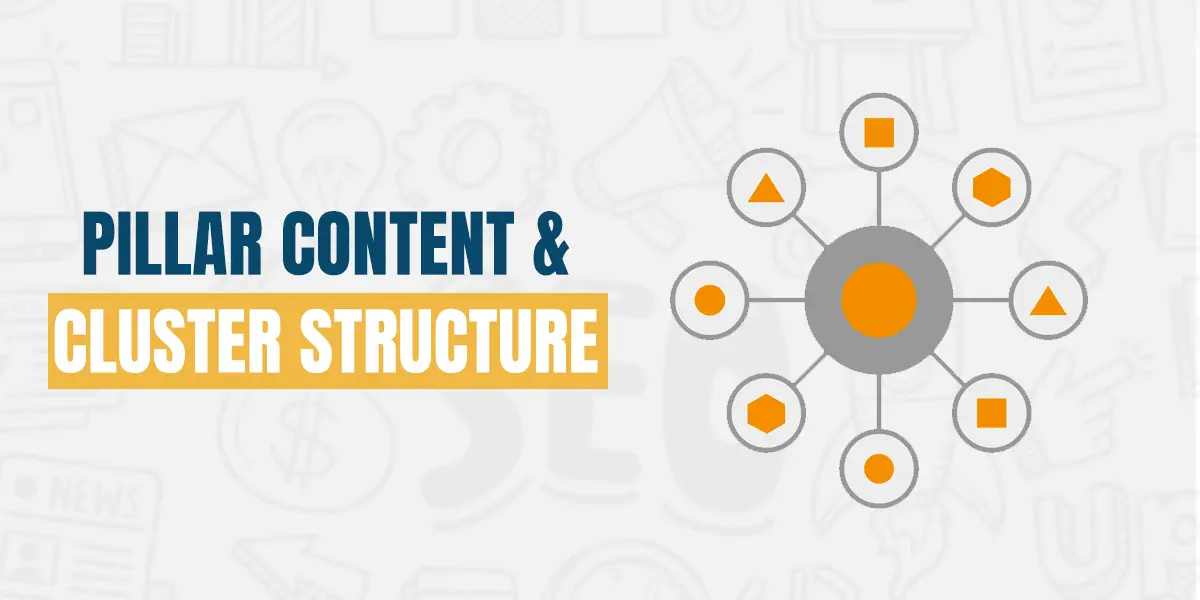
A pillar page acts as the main hub covering a broad topic, while cluster articles focus on specific subtopics and link back to the pillar. This creates a strong internal linking network that improves crawlability and relevance. As a result, your website gains better rankings, increased traffic, and stronger authority over time.
Understanding Pillar Content in Simple Terms
Pillar content is a comprehensive and in-depth page that covers a broad topic, serving as the foundation of your content strategy. It acts as a central hub that connects multiple related pieces of content. For example, if your main topic is digital marketing, the pillar page would include key areas such as SEO basics, social media marketing, paid advertising, content marketing, and analytics. While it introduces all these sections, it does not go into extreme detail for each one. Instead, it provides a clear and structured overview, guiding users and search engines to more detailed cluster content for deeper insights on each subtopic.
What is Cluster Content?
Cluster content refers to supporting blog posts that focus on specific subtopics related to a main pillar page. These articles are designed to explore one topic in greater depth, providing detailed insights that the pillar page only briefly introduces. Each cluster post targets a specific keyword or question, helping to capture more search traffic.
A key feature of cluster content is internal linking. Every cluster article links back to the pillar page, strengthening the overall content structure and helping search engines understand the relationship between topics.
For example, under a digital marketing pillar page, cluster posts could include topics like “What is SEO in 2026?”, “Facebook Ads vs Boost Posts,” and “Content Marketing Strategy Guide.” Together, they build authority and improve SEO performance.
How Pillar and Cluster Content Work Together
Pillar and cluster content work together using a hub-and-spoke model. The pillar page acts as the main hub, covering a broad topic, while the cluster blogs act as supporting spokes that dive deeper into specific subtopics. This structure creates a well-organized content network that is easy for both users and search engines to navigate.
In this system, all cluster pages link back to the pillar page, and the pillar page also links out to each cluster article. This two-way internal linking strengthens the connection between all related content and improves overall site structure.
As a result, search engines like Google clearly understand that your website provides comprehensive and in-depth coverage of a topic. This signals strong topical authority, helping improve rankings, visibility, and credibility in search results.
Why This Strategy Matters More Than Ever in 2026
Search engines have evolved significantly. Google now focuses on:
- Topic authority
- Content relationships
- User intent
- Contextual relevance
Publishing random blogs without structure creates confusion. But with the pillar-cluster strategy:
- Your content becomes organized
- Your expertise becomes clear
- Your rankings improve consistently
Key Benefits of Pillar and Cluster Strategy
1. Builds Topical Authority
This strategy helps Google recognize your website as a trusted source within a specific niche by covering a topic in depth through interconnected content.
2. Improves Search Rankings
Strong internal linking between pillar and cluster pages sends clear SEO signals, making it easier for search engines to rank your content higher.
3. Increases Organic Traffic
Cluster pages target a variety of keywords, allowing your website to attract traffic from multiple search queries and audience segments.
4. Enhances User Experience
Users can smoothly navigate between related topics, keeping them engaged and increasing time spent on your website.
5. Supports Long-Term Growth
Instead of relying on a single blog, your entire content ecosystem grows and performs together over time.
What Happens Without a Content Strategy?
When content is published randomly, Google struggles to understand your expertise, and pages often compete against each other. This weakens rankings and limits visibility. As a result, organic traffic remains low, and growth becomes slow and inconsistent, even if you are publishing content regularly and putting in continuous effort.
The Hidden Problem: Content Without Direction
Many websites struggle because they create content without a clear strategy or direction. They often write blogs without proper keyword structure, cover unrelated topics, and ignore internal linking between pages. As a result, even though content is being published regularly, it fails to deliver meaningful results. Content exists, but it does not perform.
Without a structured approach, search engines cannot recognize your expertise, and your website remains just another blog instead of becoming a trusted authority in your niche.
How to Build a Pillar and Cluster Strategy
Step 1: Choose a Core Topic
Select a broad topic that aligns with your business goals and audience needs, such as SEO, e-commerce, or cybersecurity.
Step 2: Create a Pillar Page
Develop a comprehensive, high-quality guide that covers all major aspects of the chosen topic in a structured way.
Step 3: Identify Subtopics
Break the main topic into smaller, focused areas that can be explored in more detail.
Step 4: Create Cluster Content
Write individual blog posts for each subtopic, targeting specific keywords and providing in-depth information.
Step 5: Link Everything Together
Connect all content strategically: cluster pages link to the pillar, and the pillar links back to clusters, creating a strong internal linking structure.
Real-World Example
Imagine a digital marketing website without a clear structure, with blogs on SEO, ads, and content marketing scattered, making it hard for search engines to understand relevance. With a pillar strategy, a main “Digital Marketing Guide” page connects all related blogs. This structured approach improves rankings, enhances user engagement, and increases conversions by guiding visitors through a clear content journey.
Measuring the Success of Your Pillar and Cluster Strategy
Once your pillar and cluster content strategy is implemented, the next step is to evaluate its effectiveness. Without proper tracking, it becomes difficult to understand whether your efforts are delivering real results or not. One of the most important indicators is organic traffic growth. As your cluster content starts ranking for multiple keywords, you should notice a steady increase in website visitors. This shows that your content structure is helping search engines discover and rank your pages more effectively.
Another key metric is keyword performance. Instead of relying on a single page, multiple cluster articles begin ranking for different search queries. This expands your visibility and strengthens your presence across a broader range of topics.
User engagement metrics also play a crucial role. When users move between pillar and cluster pages, it indicates strong internal linking and relevant content flow. Metrics such as time on site, pages per session, and bounce rate help you understand how effectively users are interacting with your content.
Additionally, tracking conversion rates is essential. The ultimate goal of any content strategy is not just traffic, but meaningful actions like inquiries, sign-ups, or purchases.
Conclusion: Build Authority, Not Just Content
In today’s SEO landscape, success is no longer about publishing more content, it is about publishing smarter content. Pillar and cluster strategy transforms your website into a structured, authoritative source that search engines trust and users rely on.
Instead of creating disconnected blogs, this approach builds a powerful content ecosystem where every page supports the others. Over time, this leads to stronger rankings, higher traffic, and consistent growth.
If you want to dominate your niche, attract the right audience, and turn content into real business results, it is time to move beyond random publishing and focus on strategy.
Ready to build a high-performing content system? Connect with DHi Digital today and take your SEO strategy to the next level.